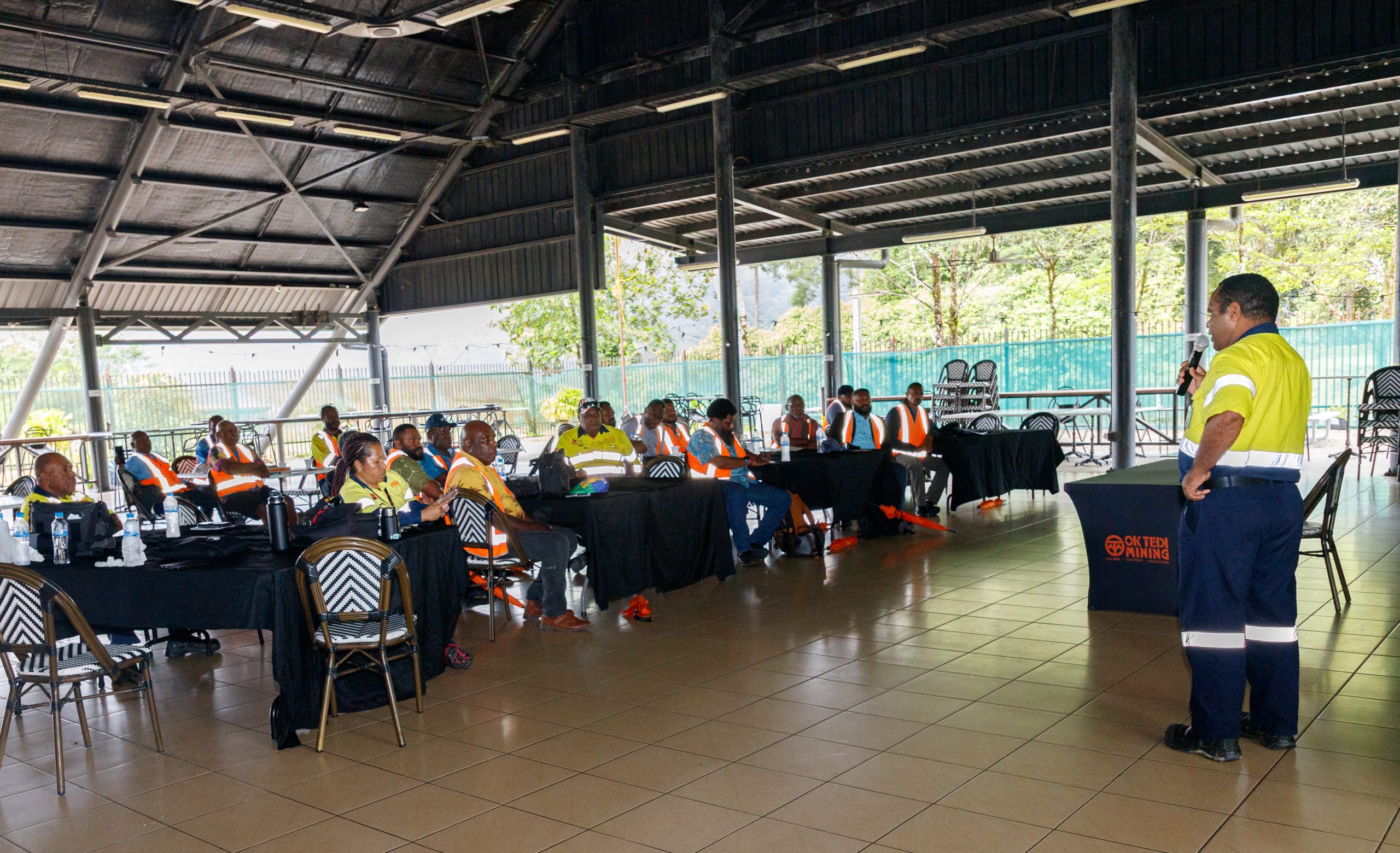
Ok Tedi Mining Limited (Ok Tedi) recently hosted senior government officials, political leaders, and landowner representatives from Morobe and Madang provinces on a fact-finding visit to Tabubil on how future resource projects can deliver greater benefits to landowners and local communities.
The week-long visit provided delegates with a rare opportunity to see firsthand how one of Papua New Guinea’s largest mining operations has integrated local participation into its business model while continuing to contribute significantly to the national economy.
For leaders from Morobe, home to the Hidden Valley Mine and the proposed Wafi-Golpu project, and Madang, where the Ramu Nickel Mine and future resource developments remain a key focus, the visit offered practical insights to help shape negotiations, governance structures, and benefit-sharing arrangements for future mining projects.
A key highlight of the visit was learning how the company has created long-term economic opportunities for mine-associated communities through strategic investment in landowner companies (LANCOs) and local businesses. This approach demonstrates how Ok Tedi has moved beyond simply providing employment, to enabling local landowners to become business owners, investors, and service providers.
Currently, 49 landowner companies provide services to the Ok Tedi operation, with more than K800 million spent annually through LANCO-related contracts and business activities. This has created a steady income stream for local communities.
Another major focus of the visit was understanding how Ok Tedi balances economic development with environmental and social responsibilities. Delegates learned about environmental management practices, rehabilitation initiatives, tailings management, community development programs, and long-term sustainability planning.
Madang Provincial Administrator Daniel Aloi said the visit provided a deeper understanding of the scale and significance of Ok Tedi’s contribution to the national economy.
He praised initiatives that created opportunities for landowner companies and local businesses to participate in contracts and service delivery, noting that such arrangements generate sustainable economic benefits beyond direct employment. He also commended the company’s willingness to take ownership of environmental and social responsibilities, describing this as an important lesson for future resource projects across the country.
Mr Aloi said the most impressive aspect of the operation was the strong presence of Papua New Guinean leadership and expertise throughout the company.
“Seeing Papua New Guineans managing complex mining operations, from executive leadership and engineering to environmental management and technical services, demonstrates the country’s growing capacity to successfully manage its own resource projects,” Mr Aloi said.
Morobe delegate Freddy Tommy, Bulolo Urban LLG President, Mayor of Bulolo, and Provincial Chairman for Mines and Petroleum, described the visit as an eye-opener that reinforced the significant opportunities available to landowners when resource projects are structured effectively.
“What we saw at Ok Tedi showed what is possible when landowners are meaningfully included in the business side of mining,” he said.
He noted that 98 percent of the workforce at Ok Tedi are Papua New Guineans and that many services are outsourced to landowner companies.
With the Wafi-Golpu project expected to become one of the country’s largest mines, Mr Tommy said lessons from Tabubil will help Morobe landowners and leaders better understand the benefits they can negotiate with developers and government. As Papua New Guinea prepares for a new generation of mining and petroleum developments, leaders from Morobe and Madang believe the lessons from Tabubil could help shape a future in which resource projects deliver broader, more sustainable benefits to landowners and surrounding communities.